
Invoices - Peppol in Qargo
Peppol functions available Q3 2025. This functionality sends and receives invoices directly through the Peppol network.
Table of contents
What is Peppol?
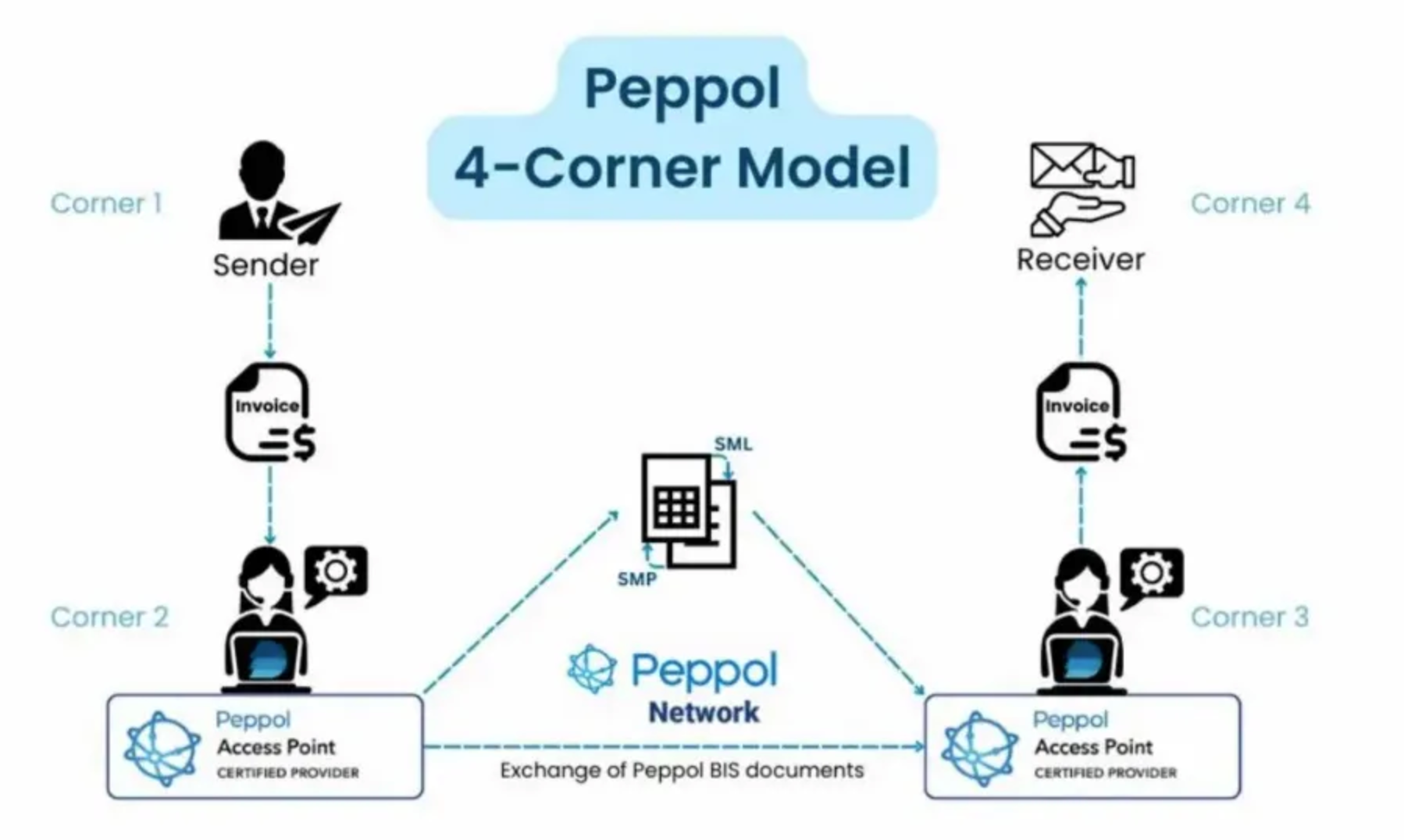
Peppol is a digital infrastructure that connects various e-procurement systems through a standardized network. It operates on a 4-corner model. Both the sender and the receiver use their own access point providers to handle the technical aspects of document exchange.
Setup requirements
Before using Peppol functionality, the following setup requirements must be completed:
• Peppol identifier: A unique Peppol identifier must be provided during setup. This identifier is formatted with the company’s tax registration number, DUNS number or other qualifying business identifier.
• Configuration assistance: The Qargo admin will handle all technical configuration as part of the setup process. No additional technical work is required from the customer.
• Account integration updates: Where account integrations already exist, the Qargo onboarding manager will coordinate any necessary updates to ensure seamless operation.
Technical implementation details
The Peppol integration includes several technical components that work automatically once configured:
• Pre-configured task: The new ‘Send Peppol Task’ will be pre-configured in the tenant and ready to use immediately after setup.
• Accounting system integration: If an accounting system integration already exists, the ‘Send Peppol Task’ will automatically link to the accounting system.
• Standard implementation: No additional engineering work is required for the standard implementation. Once the configuration to ‘send invoices’ is complete, the functionality becomes active.
• Error handling: The system provides clear error messages for unsuccessful transactions. This allows users to make the necessary corrections quickly.
• Standard functions: All standard task functions remain available, including quick actions and labeling features.
How Peppol works in Qargo
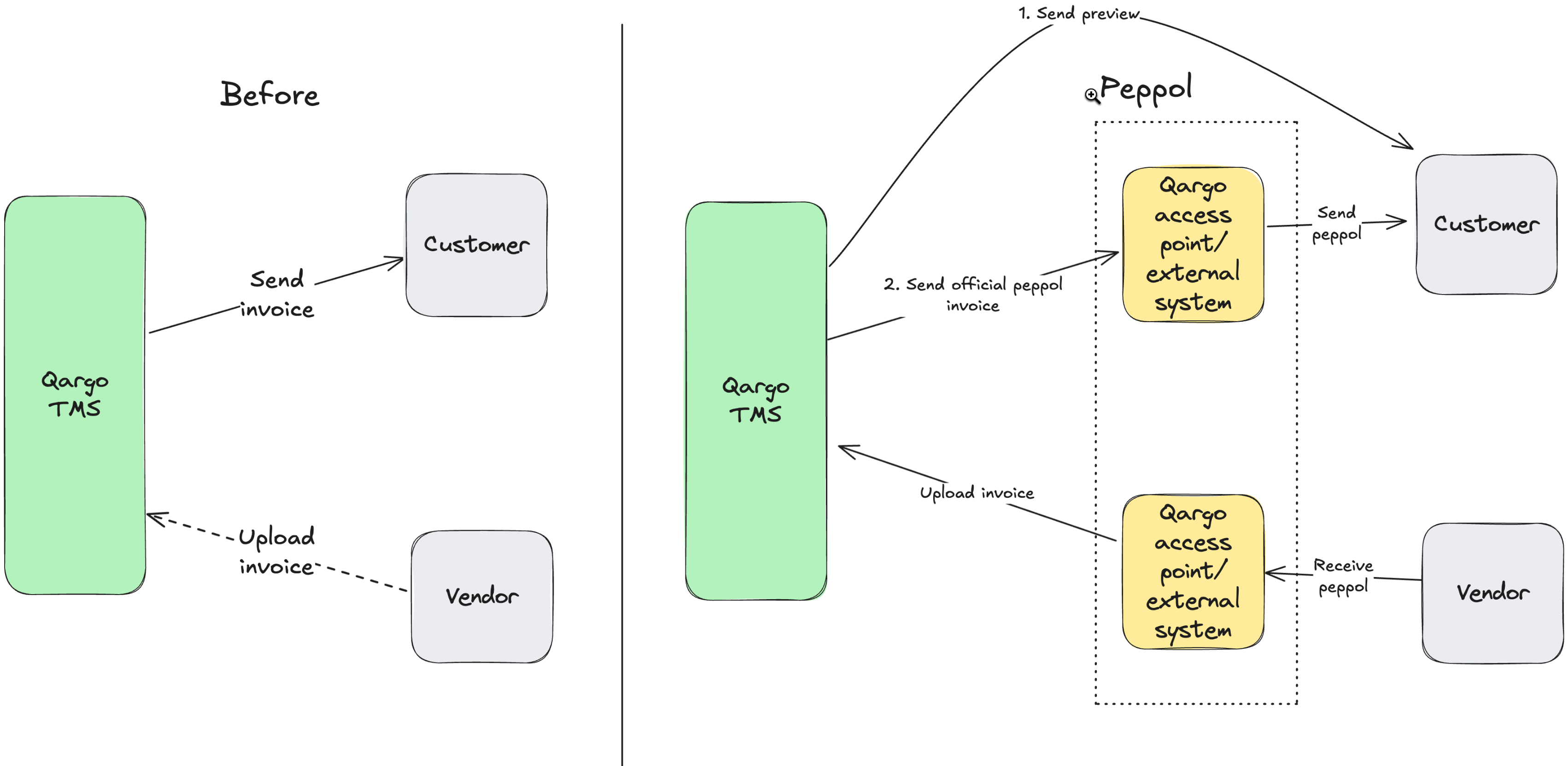
Sales invoice workflow overview (outgoing invoices)
The sales invoice workflow sends invoices through the Peppol network in the following steps:
-
Create invoice: Create the Qargo sales invoice following the existing business process.
- Generate a PDF of the invoice
-
Post invoice: Post invoice task as part of the invoice workflow
- Note: The ‘Send to accounting’ task must be complete before the invoice or credit memo can be sent to Peppol.
- The invoice must be in a posted status in accounting before it is sent to Peppol.
- A hard-coded check verifies this.
-
Submit to Peppol: Submit the invoice to Peppol using the new ‘Send Peppol Task.’
• If customer approval is needed first, a pro forma invoice can be used to get approval before sending through Peppol.
Click the link below👇 for a full overview of handling sales invoices via Peppol.
Process sales invoice via Peppol
Carrier invoice workflow (incoming invoices)
Qargo offers a choice of flexible options to handle carrier invoices. These invoices can come from multiple sources and are not necessarily associated with a specific load (for example, invoices related to office supplies). This introduces a more complicated workflow. However, these new options can accommodate this level of complexity and offer more streamlined workflow options.
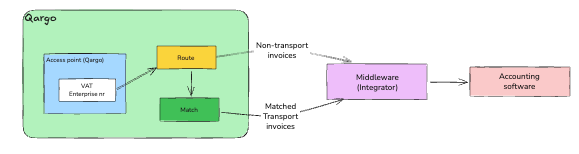
Option 1: Qargo as central access point
-
Qargo registers as the official access point.
-
All incoming carrier invoices, including non-transport carrier invoices, are processed through the Qargo access point.
-
Qargo Intelligence (Qi) processes carrier invoices
- Transport-related carrier invoices are matched to loads and sent to the accounting software
- Non-transport carrier invoices are sent to the accounting software
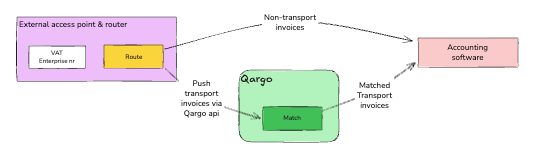
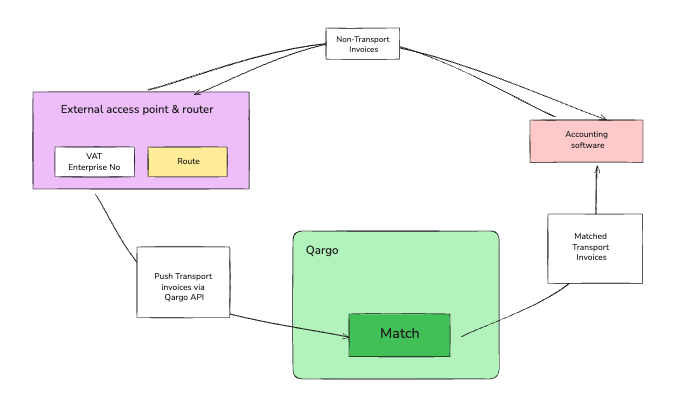
Option 2: External access point with API to Qargo
-
A third-party application acts as the official access point and router
-
The third party receives all incoming carrier invoices, filters out transport-related carrier invoices and pushes them to the Qargo API
-
Qargo Intelligence (Qi) matches and processes carrier invoices for cost allocations
-
Processed carrier invoices can be sent to the accounting software using either a manual or an integrated workflow, where available.
-
Non-transport carrier invoices are routed directly to the accounting software
-
Option: The third party sends transport-related carrier invoices directly to the accounting software. Transactions are sent back through the access point and routed back to Qargo for consistent records
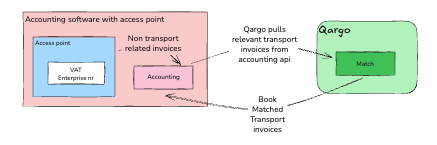
Option 3: Accounting software* as central access point
-
*Limited to Adsolut, Adfinity or Exact Online applications
-
The accounting software acts as the official access point and receives all invoices.
-
Transport-related invoices are ‘pulled’ into Qargo.
- Qargo Intelligence (Qi) matches and processes invoices for cost allocations
- Processed invoices are sent back to the accounting software
-
Non-transport invoices are processed directly in the accounting software
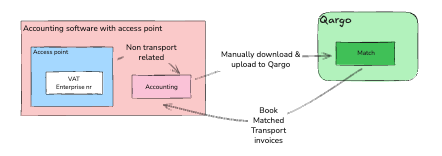
Option 4: *Other accounting software as central access point
-
*With an accounting software package not listed above, the process is somewhat manual.
-
The accounting software acts as the central access point and receives all invoices.
-
Transport-related invoices are downloaded manually
-
Invoices are manually uploaded into Qargo
- Qargo Intelligence (Qi) matches and processes invoices for cost allocations
- Transport costs are manually exported and uploaded to the accounting software.
-
-
Non-transport invoices are processed in the accounting software.
Click the link below👇 for a full overview of handling sales invoices via Peppol.
Process carrier invoices via Peppol
Questions? See the Peppol FAQs for more information.