
ADR 1,000 HazMat points system for planning
This article covers planning with HazMat points that are calculated based on the transport category of hazardous materials and their weight/volume.
Table of contents
Users can now see the HazMat points within the application and use them for planning purposes.
Introduction
HazMat points are calculated based on the transport category of hazardous materials and their weight/volume. Each transport category has a specific multiplication factor, and the total points for a shipment are the sum across all goods. When the total is equal to or exceeds 1,000 points, full ADR regulations apply and a certified driver is required.
Example:
-
A trailer with 900 kg of transport category 3 hazardous materials and 1 kg of transport category 1 hazardous materials is considered limited quantity (LQ).
- Since (900 kg x 1) + (1 kg x 50) = 950 points
-
However, adding 1 more kg of transport category 1 means the transport is considered hazardous and all regulations apply.
- Since (900 kg x 1) + (2 kg x 50) = 1,000 points
| Transport category | HazMat points factor |
|---|---|
| 0 | Always over 1,000 |
| 1 | 50 |
| 2 | 3 |
| 3 | 1 |
| 4 | 0 |
How is this shown in Qargo?
-
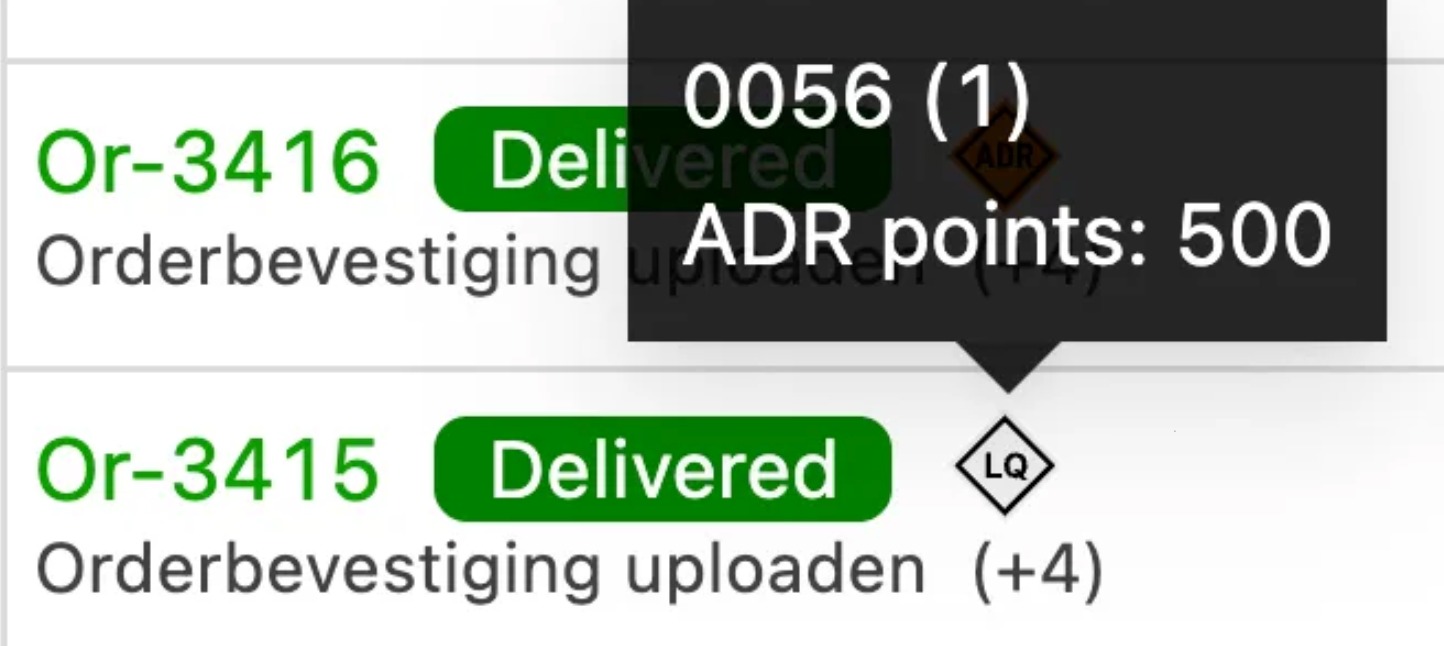
The points are shown on hover next to the order tag
-
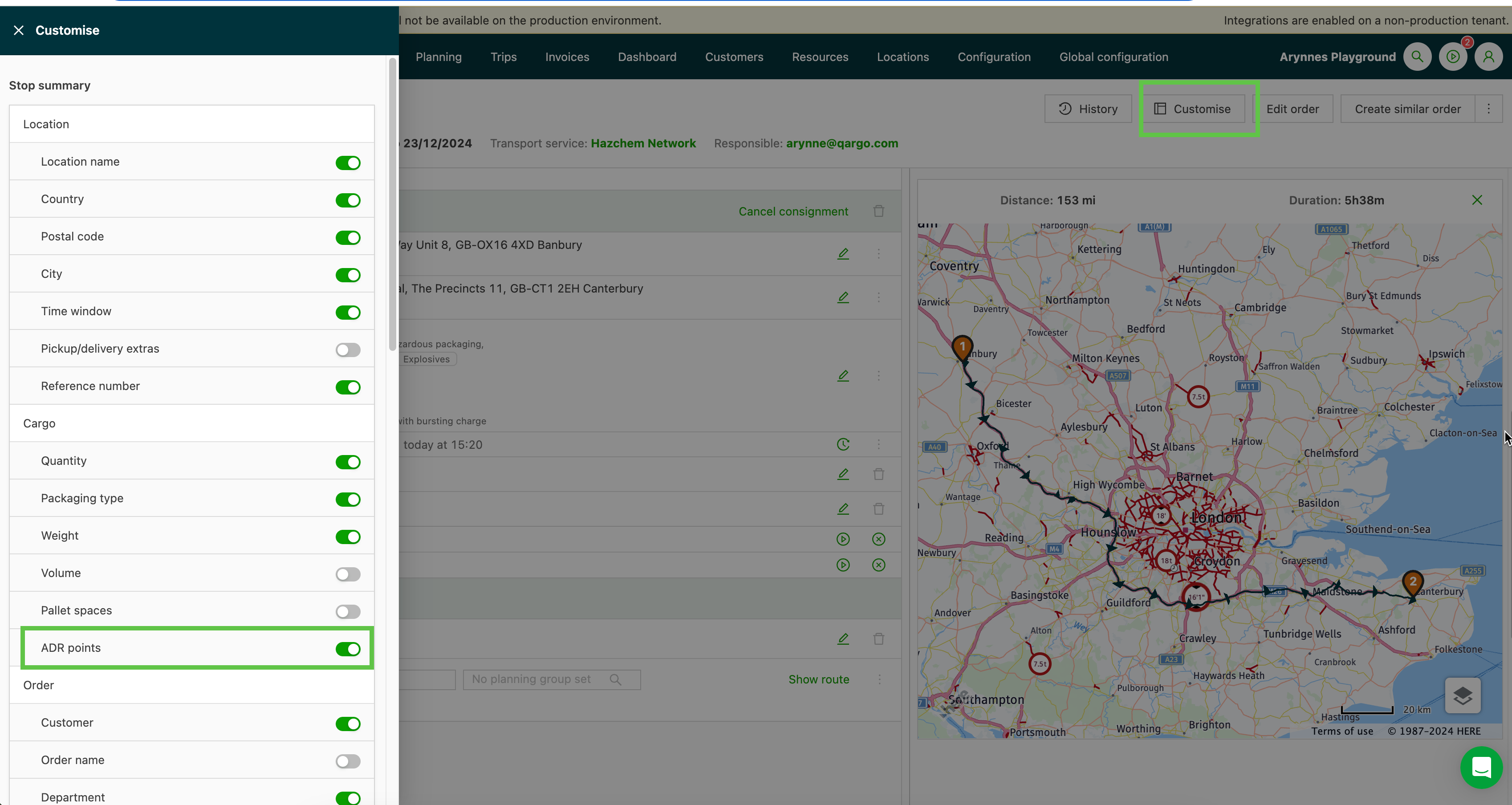
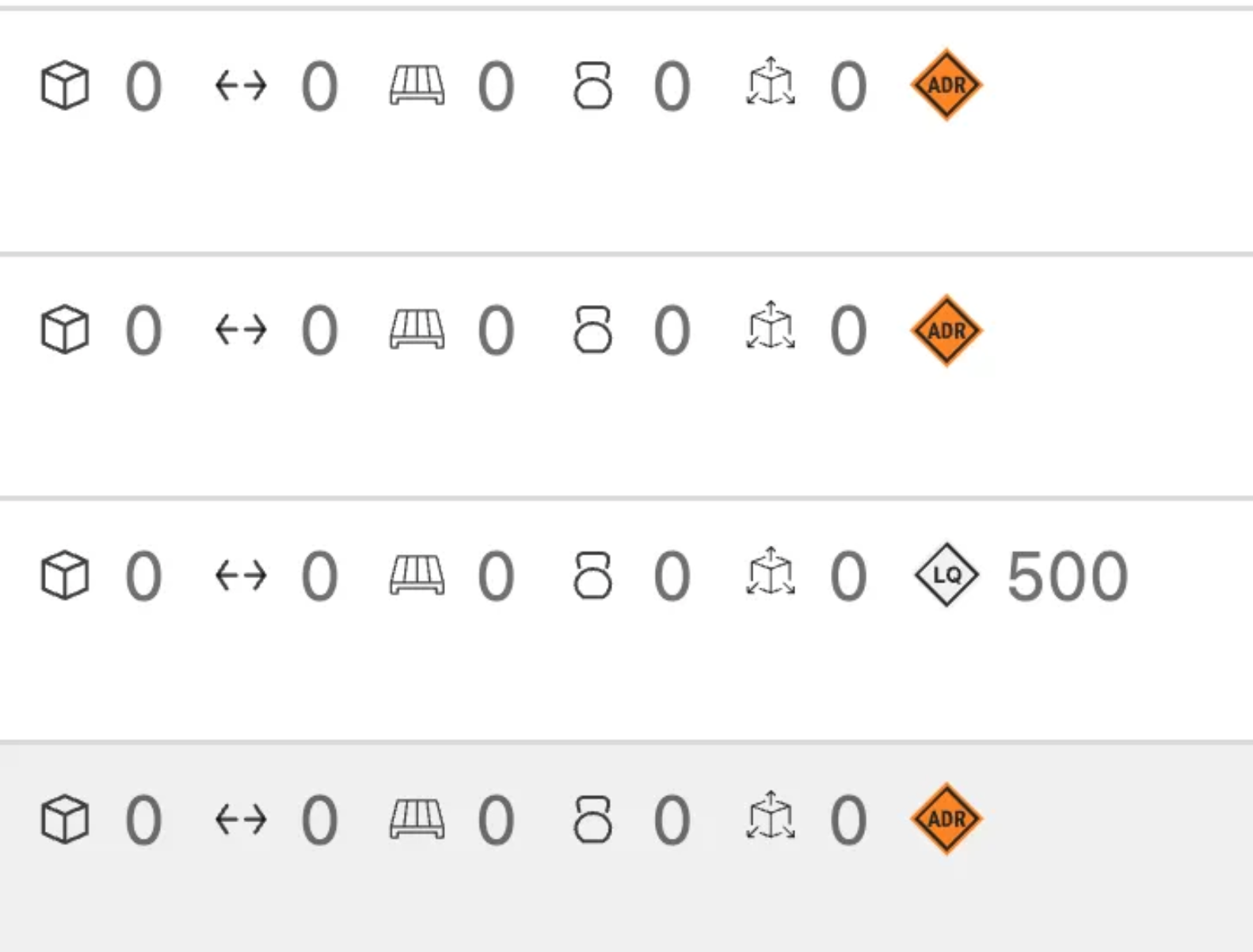
HazMat points can optionally be enabled in most Qargo screens, which shows the HazMat points in the goods info
Understanding ADR icons:
- For orders (order detail, order list): it is technically possible to mark an order ‘Limited quantity’ (LQ) (via the ADR category on the goods) and still have more than 1,000 points. In this case, the LQ icon turns orange to indicate this.
- For loads (planning board, load list): a load is considered ADR if it is transporting goods that are set as ‘hazardous materials’. This is irrespective of the number of HazMat points.
To make it easier for users to know which goods metric to fill in for the ADR item (weight vs. volume), there is now a physical state indication of the ADR substance.
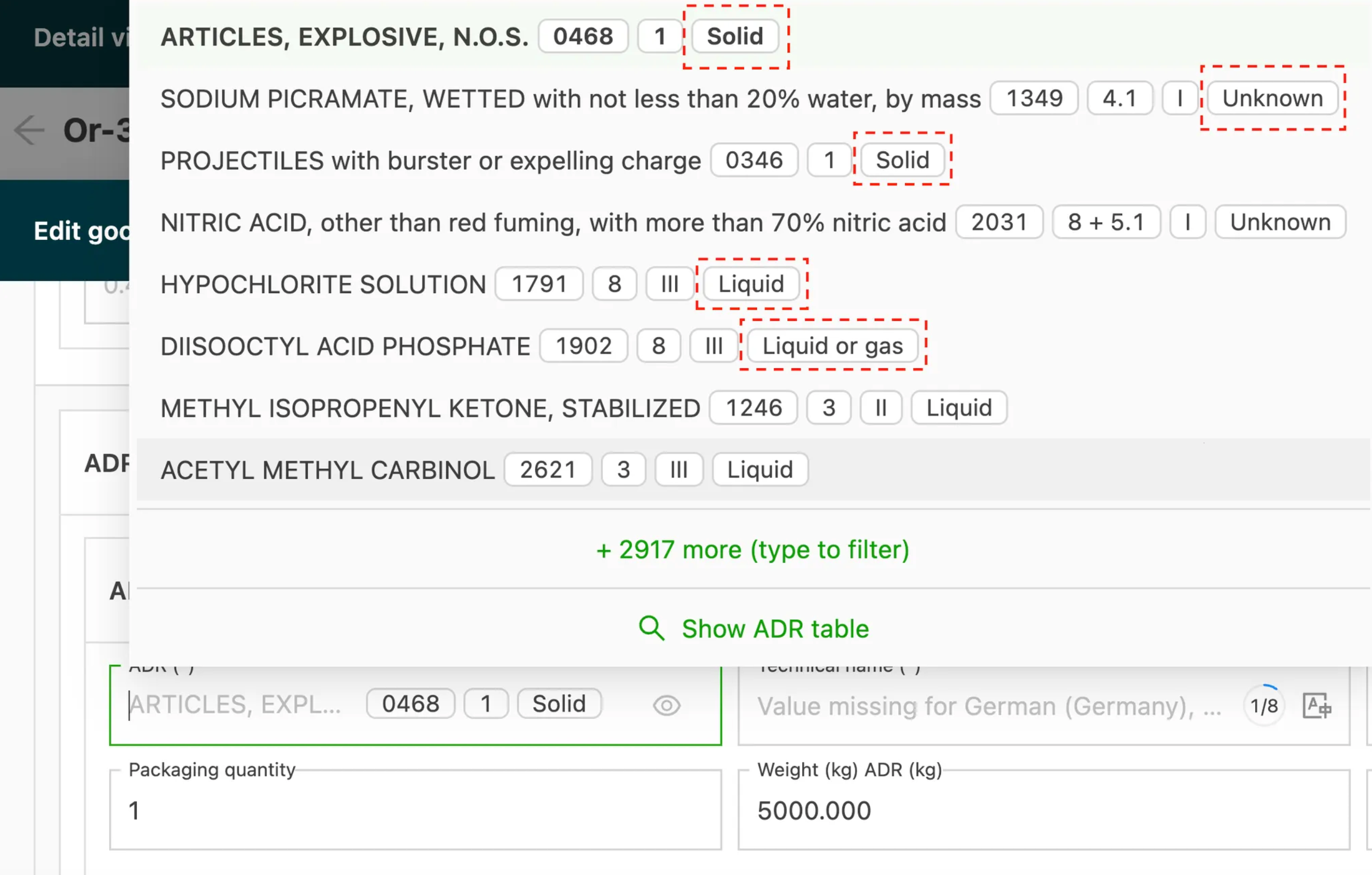
- If it’s a solid → the weight is used for the HazMat points calculation
- If it’s a gas/liquid → the volume is used for the HazMat points calculation
- If it’s unknown → whatever is filled in is used, giving priority to the weight and then the volume